
Blockchain — Trust in a World Without Referees
Blockchain redistributes trust in systems where institutions once stood. Here’s how decentralised validation works — and why it matters more as digital interactions grow.
BLOCKCHAIN
InfiniteTrends Editorial Team
12/9/20251 min read

Trust in a World Where Trust Is Fading
Blockchain is often described as a ledger, a chain of blocks, or a cryptographic puzzle.
Those definitions are correct — and yet they miss the point.
At its core, blockchain is a response to a deeper human question:
“How can we trust one another in systems where the actors are strangers?”
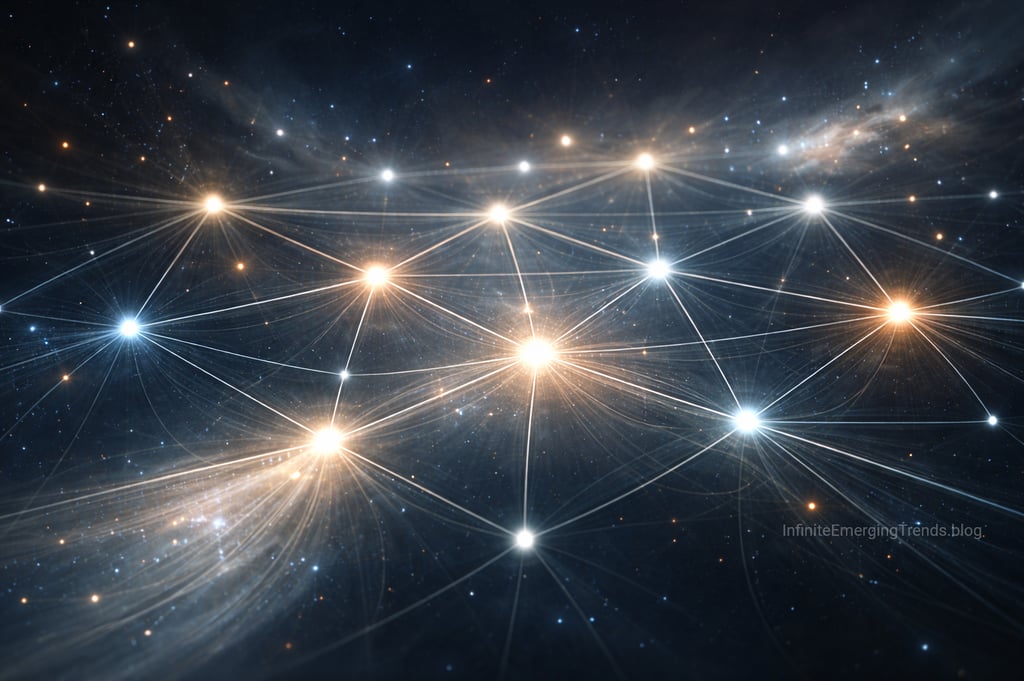
Instead of relying on an institution to validate truth, blockchain distributes that validation across many independent participants. No single party owns the record. No single actor can quietly rewrite history.
This makes blockchain useful in places where trust breaks down most easily:
verifying supply chains, protecting digital identities, securing financial transactions, certifying ownership.
But blockchain is not a cure-all.
It is slower than centralised systems, energy-hungry in certain forms, and often misunderstood. Still, its value is undeniable in one domain: it creates transparency where opacity once ruled.
In the coming years, expect quieter, more practical blockchain ecosystems — not hype-driven coins, but infrastructure powering logistics, compliance, digital credentials, and asset provenance.
A technology for trust, in an era that desperately needs it.
Full Insight coming soon — Q1 2026.
Innovate
Explore the future of technology with us.
Contact
© 2024. All rights reserved.